Pink Star Flower: A Designer’s Honest Embroidery Design Review
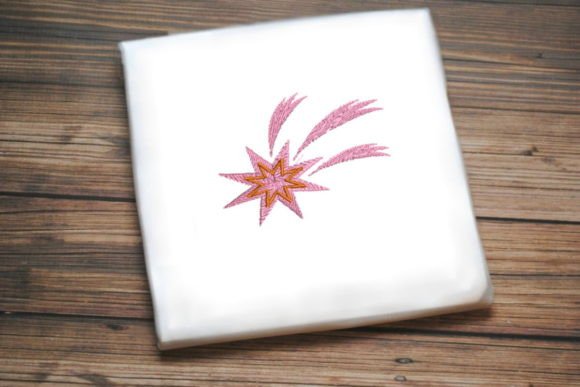
When I first opened the Pink Star Flower embroidery file, I immediately thought of a soft spring morning. The design has a gentle, whimsical personality that feels less like a standard floral and more like a little stitched star with petal-like points. It’s the kind of motif that stops you mid-scroll when you’re hunting for something that balances cute and elegant without tipping into overly saccharine territory. That mood is exactly what makes it so useful for real projects, especially when you’re trying to build a cohesive collection or add a signature touch to handmade goods.
I mentally placed it on a few things I’ve been prototyping for a small boutique client: a set of natural linen pillow covers, a lightweight baby cardigan, and a tiny canvas zipper pouch. The design’s shape, a star-meets-flower hybrid, reads clearly even at a modest size, and the pink-forward palette feels friendly and fresh. It’s not a complicated botanical illustration; it’s a stylized, decorative element that knows exactly what it is. That clarity is a huge plus for anyone who stitches for a living or sells finished pieces online.
Where the Pink Star Flower Feels Most at Home
After a few test runs, I’m convinced this design belongs in the Single Flowers category more because of how it functions than any strict botanical definition. It acts like a single accent bloom: simple, standalone, and easy to arrange into repeating patterns or clusters. I wouldn’t treat it as a realistic rose or daisy substitute. Instead, it shines as a playful, graphic floral that reads beautifully on children’s apparel, whimsical kitchen textiles, and personalized gifts.
One of the first real-life scenarios I ran through was a custom tote bag order for a craft fair vendor. She wanted something that looked hand-drawn but stitched with precision, something that would stop a customer in the aisle. The Pink Star Flower, centered on a natural canvas tote in a soft coral thread, did exactly that. The design stitched out with clean edges, and the star-like points gave it a bit of unexpected movement. It didn’t look like every other flower on the rack. That kind of visual distinction is gold for a small shop owner.
On a sweatshirt, the design takes on a different personality. Placed on the left chest or even used as a small repeated motif along a sleeve, it feels modern and slightly playful. I tried it on a blush French terry pullover, and the tonal pink thread choice elevated the whole garment. It didn’t scream “embroidery decoration”; it felt integrated into the fabric. That’s the kind of subtlety that boutique buyers appreciate.
Stitching Performance and Everyday Durability
Real-world embroidery isn’t just about how a design looks on screen. It’s about how it behaves under the needle, through washes, and across different fabric types. The Pink Star Flower performed well on medium-weight woven cotton, linen blends, and stable knit interfaces. I always recommend a test stitch on the exact fabric you plan to sell, but I can say with confidence that the design’s structure holds up nicely without excessive density in the center. That means less puckering and a softer hand, which is essential for baby items or anything that touches the skin.
I did notice that the pointed tips of the star shape require a bit of attention. On loosely woven fabrics, you might see a tiny amount of thread pull if you don’t use a sharp needle and a suitable stabilizer. A medium-weight cutaway stabilizer solved that immediately on a linen tea towel I was testing. For stretchy fabrics like a cotton-spandex onesie, I used a fusible mesh stabilizer and the result was crisp and secure. The design didn’t distort, and the pink threads stayed vibrant after a few laundry cycles.
One area I’d caution about is very small hoop sizes. While the design is likely scalable, the star points could lose their definition below a certain threshold. If you’re planning to use it on a narrow cap brim or a tiny tag, check the stitch density and do a sew-out first. The design’s elegance depends on those crisp points; muddy them, and you lose the star-like magic that makes it special.
Adding Value to Handmade and Commercial Products
One of the most practical ways I evaluate any embroidery design is by asking: “Does this increase the perceived value of the finished product?” With the Pink Star Flower, the answer is a clear yes. It’s the kind of embroidery that makes a simple tea towel look like a curated home goods boutique find. Stitched on a baby bib or a soft rattle, it adds a handcrafted sweetness that parents notice. For a holiday gift, like a monogrammed stocking with this flower accent, the design becomes a conversation piece.
For Etsy sellers and digital product creators, the design offers real versatility. You can use it on a printable mockup for a digital embroidery listing, and it reads well in both color and black-and-white previews. The shape is distinct enough that even in a grayscale mockup, you can tell it’s a star flower, not a generic daisy. That’s helpful for maintaining brand consistency across product images. I’ve seen too many designs that look great in color but become anonymous blobs in a buyer’s comparison chart. Pink Star Flower holds its visual identity.
When I think about customer trust, the design’s clean finish plays a big role. Buyers who receive a product with this embroidery will notice the even stitching, the lack of thread breaks, and the overall polished look. It communicates that the maker paid attention to the details. For a craft business, that’s the difference between a one-time sale and a loyal repeat customer.
Creative Pairings and Surprising Uses
I’ve started mentally cataloging the design combinations that work well. The Pink Star Flower pairs beautifully with simple satin stitch lettering for a personalized name project. It also works as a decorative corner element on a linen napkin set, or as a scattered design across a quilt block. Because it’s a single flower, you can mirror it, rotate it, or create a charming border without overpowering the main fabric.
One of my favorite placements was a small embroidered patch. I stitched the design on felt, trimmed it close to the edge, and added a heat-seal backing. The result was a boutique-style iron-on patch that looked like something from a high-end children’s clothing line. I tested it on a denim jacket pocket and a canvas backpack; the star shape held up, and the pink popped against the darker backgrounds. That’s a product idea that could easily translate into a profitable add-on for a craft business.
On caps, I’d stick to the front center panel or the side. The curved surface of a cap can challenge a design with sharp star points, so I recommend a hoop specifically designed for hats and a little extra care with placement. The result is worth it; the flower adds a bright, cheerful note to an otherwise plain accessory.
Practical Embroidery Notes for Your Workflow
Before you load the Pink Star Flower design onto your machine, run through a few preparation steps I always follow. First, do a test sew-out on a scrap piece of the same fabric you intend to use. This isn’t just about thread tension; it’s about understanding how the design looks in real life, under your lighting, with your chosen thread brand. I experimented with a few pink shades: a soft pastel, a brighter coral, and even a dusty rose. The design’s character shifted slightly with each, but the core shape remained strong. That flexibility is a gift for designers who want to match specific brand palettes.
Check your hoop size carefully. While the design likely fits a standard 4x4 hoop, if you’re scaling it up for a larger product, make sure the stitch density is adjusted accordingly. A design scaled beyond its original parameters without density recalculation can become too dense or too sparse. If your software allows, review the stitch preview layer by layer. I found the design’s fill stitch areas to be well-balanced, with no excessive trims or jumps that would slow down production.
Thread color contrast is another big one. On a light pink fabric, the design might blend in more than you’d like. I’d use it on white, cream, soft gray, light denim, or even a pale mint green to let the pink star flower truly shine. On dark fabric, the pink will pop, but you might need to consider a slightly darker thread color for the outline or detail areas so the star points don’t get lost. I always test on both a light and a dark background to see how the design reads.
Stabilizer choice is critical. For most woven projects, a medium-weight cutaway stabilizer works perfectly. For thin or stretchy fabrics, a fusible mesh or a no-show mesh stabilizer will prevent distortion. I keep a small notebook of successful combos; for this design, a woven cotton with a tear-away stabilizer also worked well, but I preferred the long-term stability of cutaway on items that would be washed frequently.
A Note on Licensing and Commercial Use
If you’re planning to sell finished products featuring the Pink Star Flower, or if you want to include it in a digital embroidery design bundle, take a moment to confirm the licensing terms. Not all embroidery files come with the same permissions. The product description hints at a high-quality, fun-to-stitch design, but I always recommend checking whether commercial use is allowed for physical items, and if there are any restrictions on reselling the file itself. For craft fair vendors and Etsy shops, this is a non-negotiable step. A design that looks gorgeous on a tote bag is only a business asset if you’re legally allowed to use it that way.
Final Take from the Stitching Table
After multiple test runs on different fabrics and products, I see the Pink Star Flower as a smart, versatile addition to any embroidery library. It’s not a dramatic, high-detail botanical that demands a huge hoop and a dozen thread changes. It’s a friendly, elegant accent that elevates simple projects without overcomplicating them. The star shape gives it a modern edge, and the pink palette keeps it soft and wearable. I’d reach for it again for baby gifts, spring market prep, and any custom apparel order where the client wants something “cute but not cutesy.”
For a small business owner, the design’s reliability means fewer failed sew-outs and more consistent finished products. For a hobbyist, it’s a satisfying stitch that produces a lovely result quickly. The Pink Star Flower earns its place in my working collection because it does exactly what a good single flower design should: it makes whatever you stitch it on feel a little more special, a little more thoughtful, and a lot more professional.