Salamander on Fire: An Embroidery Design Review for Brands
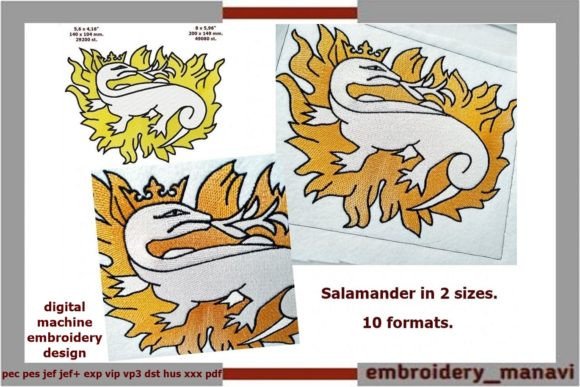
As an embroidery designer who works daily with small businesses, I’ve learned that a single machine embroidery design can completely redefine a brand’s merchandise. When I first opened the Salamander on Fire embroidery file, I saw a piece that demands attention. It’s not a quiet, understated accent—it’s a bold, fiery statement that feels equally at home on a rugged work apron and a handmade tote bag. The title alone tells you this is a design with personality: a salamander wreathed in flames, ready to inject a shot of raw energy into custom apparel and branded patches.
The product description highlights two sizes and an In The Hoop (ITH) project format, opening the door to everything from freestanding patches to direct garment embroidery. The feature that truly stands out for business use is the note: “Choose the first color of the embroidery in the color of the…”—even though the description cuts off, the intent is clear. You can match that primary thread to your brand’s signature shade, making the Salamander on Fire design feel custom-made for your café, boutique, bakery, or creative studio. This review is my honest take on how this design performs in real commercial embroidery, where consistency, durability, and brand impact are everything.
First Impressions: A Fiery Statement for Your Brand
When I evaluate a digital embroidery file for business use, I look at visual personality first. Salamander on Fire lands squarely in the bold, rustic, and slightly mythical corner. The imagery suggests a salamander moving through flames—there’s a primal, handcrafted quality that would suit a fire-roasted coffee brand, a barbecue smokehouse, a hot sauce label, a pottery studio, or even a pet brand with a fiery mascot. It’s not corporate or minimalist; it’s a design that tells a story. If your brand values warmth, passion, craftsmanship, or a touch of the untamed, this design aligns perfectly.
The two-size option is a practical gift. The larger size works as a back patch on a denim jacket or a centerpiece on a tote bag, while the smaller one slides into roles like a chest logo accent, a sleeve detail, or a cap front emblem. Because the first color is selectable, I immediately imagined threading a deep espresso brown for a café uniform, a vibrant orange for a hot sauce label, or a soft gold for a candle maker’s branding. That flexibility means the design assets can be adapted to multiple product lines while keeping a cohesive brand identity.
Where Salamander on Fire Shines in Commercial Use
Over the years, I’ve stitched thousands of designs on everything from twill caps to linen aprons, and I see clear, high-value applications for this embroidery file. Here’s how I would deploy Salamander on Fire for a small business:
- Embroidered patches: The ITH format is perfect for creating standalone patches. I’d hoop a heavy cutaway stabilizer, stitch the design, and then cut around the salamander shape. The result is a premium patch that can be sewn onto jackets, backpacks, or caps. The two sizes let you offer a large statement patch and a smaller, more delicate accent. For a craft business selling handmade goods, packaged patches are a high-margin item.
- Aprons and uniforms: A café or bakery staff wearing black aprons with a fiery salamander chest logo immediately looks cohesive and professional. The flame element adds warmth without being overly cute. I’d test the small size on the bib of an apron, and the larger one on the pocket. For a butcher shop or smokehouse, the design feels like a natural brand mark.
- Caps and hats: The smaller size should fit beautifully on a structured cap front, provided the flame points aren’t so tall that they distort on the curve. I’d use a cap hoop and a tear-away stabilizer, and stitch a sample first to check registration. A curved bill could also accommodate the design as a side patch.
- Tote bags: A canvas tote with Salamander on Fire stitched in the corner becomes a walking billboard for the brand. The design’s handcrafted feel aligns perfectly with boutique merchandise, customer gifts, or event merch. I’ve seen businesses use designs like this to turn a simple tote into a collectible.
- Product packaging accents: For a small-batch food producer or candle maker, a tiny embroidered patch attached to a hangtag or sewn onto a fabric bag adds a tactile, artisanal touch that elevates the entire unboxing experience.
Design Considerations and Cautions for Production
No design is a one-click solution, and Salamander on Fire comes with a few points that need careful attention before you commit to a bulk order. I approach every new embroidery file with a testing mindset, and here’s what I’d check:
- Small patch performance: The smaller of the two sizes must hold up under scrutiny. If the salamander has tiny toes, flame flickers, or fine outlines, those details can close up on textured fabrics like fleece or heavy canvas. I always stitch the design on the exact fabric the business will use, at the actual size, to see if any details vanish. If the stitch density is too high, it can create a stiff, uncomfortable patch on apparel.
- Color contrast and thread choice: The first color selection is powerful, but the surrounding colors matter too. If the design has multiple color stops, I’d test the whole palette. I advise businesses to view the design in black and white first—a strong brand mark should still be recognizable without color. Once I pick the primary thread, I’ll stitch a few variations: a monochromatic version using the brand color for everything, and a two-tone version where the flame is bright and the salamander is a darker complementary shade. This testing prevents a muddy, unreadable result on a dark uniform.
- Fabric texture and stabilizer: On stretchy polo shirts, I’d use a sturdy cutaway stabilizer to prevent distortion. On a terrycloth apron, a water-soluble topper keeps the stitches from sinking into the loops. For patches, a heavy tear-away or cutaway is essential. Don’t skip the stabilizer step—it’s the difference between a professional finish and a puckered mess.
- Curved surfaces: Caps and tote bag corners introduce distortion. I’d digitize a quick test on a cap hoop to see if the design’s alignment stays true. The two sizes help; the smaller one is safer for caps. For a structured cap front, I might reduce the design slightly below the maximum recommended size to keep the flame tips from bending.
- Washing durability: Aprons and work shirts get thrown in hot washes. I’d do a five-wash test to check for thread breaks, color bleeding, and edge fraying. If the stitch count is moderate and the underlay is solid, the design should hold up. I always recommend polyester thread for its strength and colorfastness on commercial items.
- Licensing awareness: The description doesn’t explicitly state commercial use terms. Before selling finished products with this design, I’d contact the seller to confirm that the embroidery file is licensed for commercial use on physical goods. Most designers allow it, but you never want to assume. And never resell the digital file itself.
How Salamander on Fire Elevates Brand Identity
In my experience, a well-chosen machine embroidery design does far more than decorate—it builds trust. When a customer sees a finely stitched Salamander on Fire patch on a tote or an apron, they immediately perceive the product as intentional and premium. It’s a visual shortcut that says, “This brand cares about the details.”
For a small business, that kind of recognition is invaluable. The fiery salamander becomes a memorable symbol, much like a subtle logo but with more personality. I’ve watched bakeries use a similar fire-themed design and turn it into a beloved mascot that customers ask about. The customizable first color means you can perfectly match the thread to your brand palette, ensuring that every piece of merchandise—from a cap to a staff uniform—feels like a unified family. This consistency is what builds a professional brand identity, even on a handmade budget.
Product value also jumps. A plain tote bag might sell for $12, but the same bag with a high-quality embroidered patch can command $25 or more. The perceived craftsmanship is higher. For Etsy sellers, listing “handmade embroidered patch with your choice of color” opens the door to customization requests and higher customer engagement. The design’s bold, slightly rustic character also works beautifully for brands that market themselves as artisanal, wildcrafted, or rooted in nature. Salamander on Fire fits the Animals category, but it’s not a cutesy pet—it’s a symbol of heat and transformation, which can align with a brand’s deeper story.
Practical Designer Notes for Production
If you’re an embroidery shop owner or a small business handling production in-house, here’s the workflow I’d follow when using Salamander on Fire:
- Load the embroidery file into your software. Check the color stops, trims, and stitch count. Since the design comes in two sizes, examine both carefully. The stitch density might differ between sizes, and the smaller one may have simplified paths.
- Stitch a sample on the actual fabric. Use the same stabilizer, thread, and needle you’ll use in production. I’d stitch both sizes, even if you only plan to use one, just to have a reference. Pay attention to how the first color interacts with the other elements—some fire designs look best with a bright yellow-orange, while others work with a deep red or even a teal for a magical twist.
- Create a printable mockup. Take a photo of the stitched sample and overlay it on a digital image of the cap, apron, or tote you’re branding. This helps your client or team visualize the finished product. I always compare the design beside other design assets the brand already uses, to ensure the style and scale don’t clash.
- Test the ITH patch process. If you plan to make patches, run a full ITH cycle: stitch the design, trim the edge, and finish with a heat seal or sewing. The patch should feel sturdy and look clean. I’d also test the design on the back of a jacket to see how it drapes.
- Confirm hoop size and format compatibility. The description doesn’t list the required hoop sizes, so I’d message the seller or check the file notes. A business using a single-needle home machine might need a 4x4 hoop for the smaller size, while a commercial multi-needle can handle a larger hoop. The embroidery file format (DST, PES, etc.) must match your machine. Always verify before purchase.
Final Verdict: Is Salamander on Fire Right for Your Brand?
After thoroughly reviewing the design and imagining it on dozens of products, I’d say Salamander on Fire is a standout choice for brands that embrace boldness and a touch of the untamed. It’s not a safe, generic floral or monogram—it’s a design that carries a narrative. For a coffee roaster, a hot sauce company, a bakery with a wood-fired oven, or an outdoor gear brand, the salamander in flames feels authentic and earned.
The two sizes and ITH format give you the flexibility to create patches, direct embroidery, and appliqués without extra digitizing work. The customizable first color is the secret weapon for achieving brand color harmony, and the overall stitch quality, when properly tested, will hold up to commercial use. My only caution is to treat the smaller size with care on heavily textured fabrics and to always, always run a wash test. If you do that, you’ll end up with a product that looks professional and memorable.
For a small business ready to invest in custom apparel, an embroidered patch featuring Salamander on Fire can become the signature mark that customers recognize and trust. It’s the kind of design that turns a simple tote bag or uniform shirt into a piece of brand storytelling. I’d recommend it without hesitation for any brand that wants to make a fiery, lasting impression.